Wire Rope and Cable
Product Overview
Ferrule mesh is a versatile and robust mesh system that finds extensive use in both architectural and industrial applications. This mesh is known for its flexibility, strength, and aesthetic appeal. Below is a detailed explanation covering its characteristics, construction, applications, and advantages.
Characteristics
- Material:
- Stainless Steel: The primary material used in ferrule mesh is stainless steel, typically grade 304 or 316. These grades are chosen for their high corrosion resistance, durability, and strength, making them suitable for both indoor and outdoor applications.
- Construction:
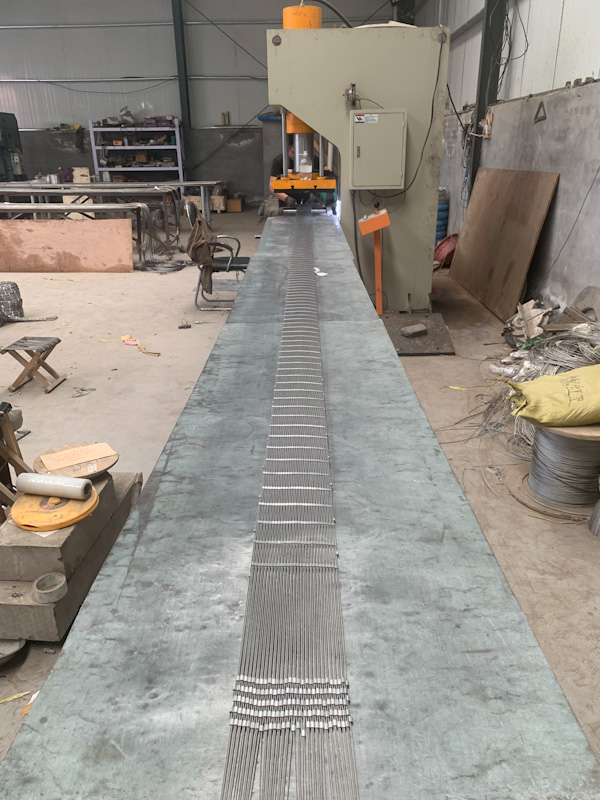
- Cables and Ferrules: The mesh is constructed using high-tensile stainless steel cables that are threaded through metal ferrules. Ferrules are small, cylindrical sleeves that crimp the cables together at their intersections. This construction method creates a net-like structure that is both flexible and sturdy.
- Mesh Patterns: Ferrule mesh can be manufactured in various patterns, such as square, diamond, or custom configurations, to suit different design requirements. The mesh opening size can also be varied depending on the application, ranging from small apertures for animal enclosures to larger ones for architectural facades.
Applications
- Architectural:
- Facades and Green Walls: Ferrule mesh is commonly used in green walls and building facades. The mesh provides a support structure for climbing plants, which can enhance the aesthetic appeal of buildings, improve air quality, and provide natural insulation.
- Balustrades and Railings: In staircases, balconies, and bridges, ferrule mesh serves as an infill for railings and balustrades. It provides safety without obstructing views, creating a visually appealing yet secure barrier.
- Safety Nets: Ferrule mesh is installed in areas where fall protection is necessary, such as around open stairwells, atriums, and balconies in commercial buildings. It ensures safety while maintaining an open, airy feel.
- Animal Enclosures: Zoos and aviaries use ferrule mesh to create secure yet minimally obtrusive enclosures for animals. The mesh allows for clear visibility and natural light penetration, providing a better environment for both animals and visitors.
- Industrial:
- Fall Protection: In industrial settings, ferrule mesh is used as a safety measure to prevent falls from heights. It can be installed around scaffolding, platforms, and open-sided floors.
- Machine Guarding: Ferrule mesh provides protection around machinery to prevent accidental contact. Its flexibility and strength make it an ideal solution for safeguarding hazardous areas while maintaining visibility and ventilation.
- Perimeter Fencing: Ferrule mesh is also used for perimeter fencing in industrial facilities, providing a secure barrier that is difficult to breach.
Advantages
- Flexibility: Ferrule mesh is highly flexible and can be shaped to fit a variety of forms and structures.
- Durability: The use of stainless steel ensures that ferrule mesh is highly durable and resistant to corrosion, UV radiation, and extreme temperatures.
- Aesthetic Appeal: Ferrule mesh offers a modern, minimalistic look that complements contemporary architectural styles.
- Transparency: Provides safety without obstructing views or light.
- Low Maintenance: Requires minimal cleaning and does not rust easily.
- Safety: High tensile strength ensures reliable protection in safety applications.
Examples of Use
- Green Wall Facades: Supports climbing plants for vertical gardens.
- Sports Stadium Safety Nets: Provides spectator safety while maintaining clear views.
- Zoo Aviaries:Creates secure enclosures allowing unobstructed visibility.
- Pedestrian Bridges:Offers safe railing infill without blocking views.
- Industrial Fall Protection:Used to prevent falls in elevated work areas.
Material Specifications
-
- Stainless Steel Grades:
- Grade 304: Suitable for most indoor and mild outdoor environments;
- Grade 316: Ideal for marine or highly corrosive environments.
- Stainless Steel Grades:
Cable Specifications
-
-
- Cable Diameter:Ranges from 1.0 mm to 4.0 mm depending on strength needs.
- Cable Construction:
- 7x7: Balanced flexibility and strength.
- 7x19: Higher flexibility for demanding applications.
-
Mesh Specifications
-
-
- Mesh Opening Size:
- Options from 20x20 mm to 200x200 mm depending on application.
- Mesh Pattern:
- Diamond (Rhombic)
- Square
- Mesh Opening Size:
-
Ferrule Specifications
-
-
- Material:
- Stainless steel ferrules for strength and corrosion resistance.
- Type:
- Pressed Ferrules
- Swaged Ferrules
- Material:
-
Mechanical Properties
-
-
- Tensile Strength:
- 1570 MPa to 1770 MPa.
- Breaking Load:
- Varies by cable thickness and construction.
- Tensile Strength:
-
Coating and Finishing
-
-
- Surface Finish:
- Natural (Mill) Finish
- Electropolished
- Powder Coating
- Surface Finish:
-
Customization Options
-
-
- Tailored Mesh Sizes:
- Panels can be custom sized.
- Edge Treatments:
- Reinforced or custom edges available.
- Tailored Mesh Sizes:
-
Example Specifications for a Common Application
-
-
- Material: Stainless Steel 316
- Cable Diameter: 2.0 mm
- Cable Construction: 7x7
- Mesh Opening Size: 50 mm x 50 mm
- Ferrule Type: Pressed Stainless Steel
- Tensile Strength: 1570 MPa
- Surface Finish: Electropolished
-
Application-Specific Considerations
-
- Load Requirements: Must meet safety standards for fall protection.
- Environmental Factors: Grade 316 recommended for corrosive environments.
- Aesthetic Preferences: Powder coating or custom finishes available.
In-Stock
Category: Wire Products


Product Overview
Ferrule mesh is a versatile and robust mesh system that finds extensive use in both architectural and industrial applications. This mesh is known for its flexibility, strength, and aesthetic appeal. Below is a detailed explanation covering its characteristics, construction, applications, and advantages.
Characteristics
- Material:
- Stainless Steel: The primary material used in ferrule mesh is stainless steel, typically grade 304 or 316. These grades are chosen for their high corrosion resistance, durability, and strength, making them suitable for both indoor and outdoor applications.
- Construction:
- Cables and Ferrules: The mesh is constructed using high-tensile stainless steel cables that are threaded through metal ferrules. Ferrules are small, cylindrical sleeves that crimp the cables together at their intersections. This construction method creates a net-like structure that is both flexible and sturdy.
- Mesh Patterns: Ferrule mesh can be manufactured in various patterns, such as square, diamond, or custom configurations, to suit different design requirements. The mesh opening size can also be varied depending on the application, ranging from small apertures for animal enclosures to larger ones for architectural facades.
Applications
- Architectural:
- Facades and Green Walls: Ferrule mesh is commonly used in green walls and building facades. The mesh provides a support structure for climbing plants, which can enhance the aesthetic appeal of buildings, improve air quality, and provide natural insulation.
- Balustrades and Railings: In staircases, balconies, and bridges, ferrule mesh serves as an infill for railings and balustrades. It provides safety without obstructing views, creating a visually appealing yet secure barrier.
- Safety Nets: Ferrule mesh is installed in areas where fall protection is necessary, such as around open stairwells, atriums, and balconies in commercial buildings. It ensures safety while maintaining an open, airy feel.
- Animal Enclosures: Zoos and aviaries use ferrule mesh to create secure yet minimally obtrusive enclosures for animals. The mesh allows for clear visibility and natural light penetration, providing a better environment for both animals and visitors.
- Industrial:
- Fall Protection: In industrial settings, ferrule mesh is used as a safety measure to prevent falls from heights. It can be installed around scaffolding, platforms, and open-sided floors.
- Machine Guarding: Ferrule mesh provides protection around machinery to prevent accidental contact. Its flexibility and strength make it an ideal solution for safeguarding hazardous areas while maintaining visibility and ventilation.
- Perimeter Fencing: Ferrule mesh is also used for perimeter fencing in industrial facilities, providing a secure barrier that is difficult to breach.
Advantages
- Flexibility: Ferrule mesh is highly flexible and can be shaped to fit a variety of forms and structures.
- Durability: The use of stainless steel ensures that ferrule mesh is highly durable and resistant to corrosion, UV radiation, and extreme temperatures.
- Aesthetic Appeal: Ferrule mesh offers a modern, minimalistic look that complements contemporary architectural styles.
- Transparency: Provides safety without obstructing views or light.
- Low Maintenance: Requires minimal cleaning and does not rust easily.
- Safety: High tensile strength ensures reliable protection in safety applications.
Examples of Use
- Green Wall Facades: Supports climbing plants for vertical gardens.
- Sports Stadium Safety Nets: Provides spectator safety while maintaining clear views.
- Zoo Aviaries:Creates secure enclosures allowing unobstructed visibility.
- Pedestrian Bridges:Offers safe railing infill without blocking views.
- Industrial Fall Protection:Used to prevent falls in elevated work areas.
Material Specifications
-
- Stainless Steel Grades:
- Grade 304: Suitable for most indoor and mild outdoor environments;
- Grade 316: Ideal for marine or highly corrosive environments.
- Stainless Steel Grades:
Cable Specifications
-
-
- Cable Diameter:Ranges from 1.0 mm to 4.0 mm depending on strength needs.
- Cable Construction:
- 7×7: Balanced flexibility and strength.
- 7×19: Higher flexibility for demanding applications.
-
Mesh Specifications
-
-
- Mesh Opening Size:
- Options from 20×20 mm to 200×200 mm depending on application.
- Mesh Pattern:
- Diamond (Rhombic)
- Square
- Mesh Opening Size:
-
Ferrule Specifications
-
-
- Material:
- Stainless steel ferrules for strength and corrosion resistance.
- Type:
- Pressed Ferrules
- Swaged Ferrules
- Material:
-
Mechanical Properties
-
-
- Tensile Strength:
- 1570 MPa to 1770 MPa.
- Breaking Load:
- Varies by cable thickness and construction.
- Tensile Strength:
-
Coating and Finishing
-
-
- Surface Finish:
- Natural (Mill) Finish
- Electropolished
- Powder Coating
- Surface Finish:
-
Customization Options
-
-
- Tailored Mesh Sizes:
- Panels can be custom sized.
- Edge Treatments:
- Reinforced or custom edges available.
- Tailored Mesh Sizes:
-
Example Specifications for a Common Application
-
-
- Material: Stainless Steel 316
- Cable Diameter: 2.0 mm
- Cable Construction: 7×7
- Mesh Opening Size: 50 mm x 50 mm
- Ferrule Type: Pressed Stainless Steel
- Tensile Strength: 1570 MPa
- Surface Finish: Electropolished
-
Application-Specific Considerations
-
- Load Requirements: Must meet safety standards for fall protection.
- Environmental Factors: Grade 316 recommended for corrosive environments.
- Aesthetic Preferences: Powder coating or custom finishes available.
Why Choose Us
Duke’s Wire Mesh Supply Services Ltd. is one of the most competitive metal manufacturers in North America. Our products are delivered to more than 160 countries and regions. We are looking forward to offering you high-quality services and goods for unbeatable prices. Call us for a quotation.
Request A Quote
Duke’s Metal Industries is one of the most competitive metal manufacturers in North America. Our products are delivered to more than 160 countries and regions. We are looking forward to offering you high-quality services and goods for unbeatable prices. Call us for a quotation.